Curaçao is small enough to see properly in under a week, but it's spread out, and almost everything worth doing is a drive. The island splits roughly into three: Willemstad and its old town, the developed south coast, and the wild west and north, which is where most of the memorable stuff is.
A useful rule: pair one big thing with one beach each day. Trying to stack three attractions into a day mostly produces a day spent in a rental car.
The big ones — worth planning a day around
Klein Curaçao boat trip
A full day out to an uninhabited island an hour or two offshore — white sand, a derelict lighthouse, a shipwreck on the windward side, and snorkelling in very clear water. It's the single most-recommended day trip on the island and it books out, particularly in high season. Departures are early and the crossing can be rough if the sea is up. Full details →
Shete Boka National Park
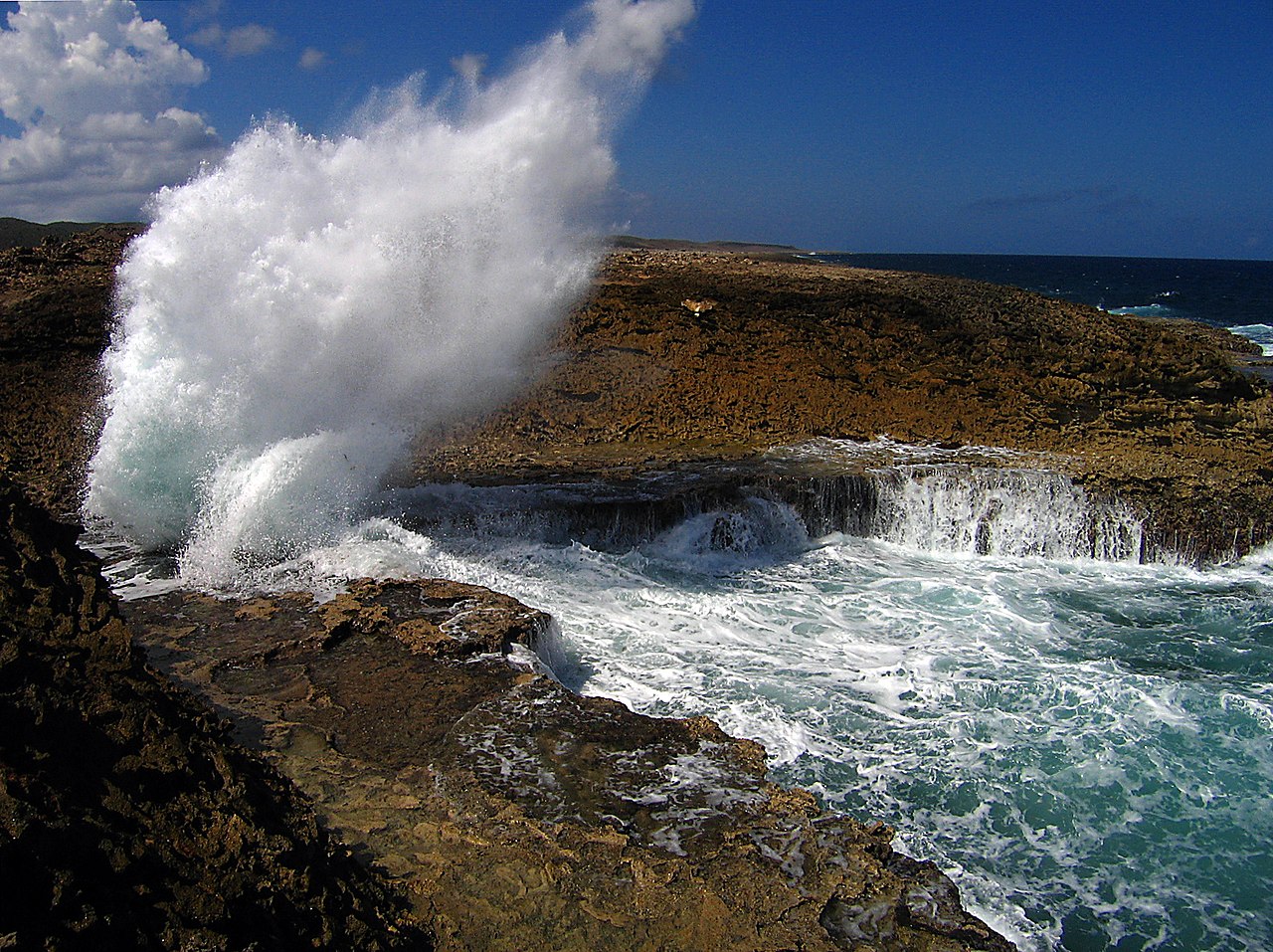
The wild north coast, where the Atlantic hits limestone and explodes. A series of inlets ("boka") you walk between, with Boka Pistol firing spray up through a blowhole. Completely different in character to the calm leeward beaches, and the best hour on the island for photographs. Full details →
Christoffel National Park
The island's highest point and its main hiking. The summit climb is short but genuinely steep and scrambly near the top, and the park closes the trail to new starts mid-morning because of the heat — so this is an early-start activity or not one at all. Full details →
Blue Room Cave
A sea cave you swim or duck-dive into, lit from below so the whole interior glows electric blue. Reached by boat tour or a kayak paddle from Playa Santa Cruz. It only works when the sea is calm, so treat it as an opportunistic plan rather than a fixed one. Full details →
Nature and wildlife
Flamingo spotting at Jan Kok
Salt pans where flamingos feed, free to visit and genuinely reliable at the right time of day. Stay on the road, use a zoom rather than approaching, and go early or late — midday and they're distant and heat-hazed. Full details →
Hato Caves
Limestone caves with stalactites, bats and some historical significance as a hiding place for escaped slaves. Guided only, takes about an hour, and it's cool and shaded — a good option for the hottest part of the day. Full details →
Curaçao Sea Aquarium
The most family-oriented attraction on the island, on the Mambo Beach side. Easy to combine with a beach afternoon since it's right there. Full details →
St. Joris Bay
The island's windsurfing and kitesurfing bay on the wild side, with reliable trade winds. Rental and lessons available on site. Even if you don't sail, it's a good place to watch people who can. Full details →
History, culture and museums
Handelskade and the Punda walk
The row of coloured Dutch colonial buildings along the water is the image of Curaçao, and the floating Queen Emma pontoon bridge swings open for ships several times a day. Free, walkable, and the light in the hour before sunset is the reason every photo of the island looks like that. Full details →
Mikvé Israel-Emanuel Synagogue
The oldest synagogue in continuous use in the Americas, with a sand-covered floor. Small, quiet, and genuinely significant — worth the twenty minutes even if you're not usually a museum person. Full details →
Kura Hulanda Museum
A serious, unflinching museum on the transatlantic slave trade and African heritage, set within a restored village of colonial buildings. The most substantial cultural experience on the island, and not a light one. Full details →
Landhuis Chobolobo
Where the actual Blue Curaçao liqueur is made, in a historic plantation house. Short tour, tasting at the end, and the origin story of the only thing on the island most people had heard of before arriving. Full details →
Otrobanda street art and Rif Fort
The other side of the bridge from Punda, and less polished — large murals through the back streets, and an 19th-century fort now full of shops and restaurants. Good for an unstructured afternoon wander. Full details →
Local traditions visitors miss
These are the ones that separate a good trip from a generic one. None of them appear on the standard attraction lists.
Punda Vibes
A weekly street festival in the old town — live music, food stalls, lights strung across the streets, and a mixed local and visitor crowd. It's free, it's every Thursday, and a remarkable number of visitors are in town on a Thursday and never hear about it. Full details →
Fuik Bay on a Sunday
A sheltered bay reachable only by boat, where the island's boats raft up together on Sundays into a floating party. This is a genuine local tradition rather than a tourist product — you'll need to join a trip or know someone with a boat, but it's one of the most characteristic days out in Curaçao. Full details →
Den Paradera Herb Garden
A garden of traditional medicinal plants, run as a working project preserving Curaçaoan herbal knowledge. Quiet, small, and a very different window into the island than the forts and beaches. Full details →
The floating market
Venezuelan boats moored along the canal selling fruit and vegetables. Its scale varies depending on trade and conditions, so treat it as a short stop while you're in Punda rather than a destination in itself. Full details →
How many days do you need?
Three days gets you Willemstad, one west-coast beach day, and one big activity — realistically Klein Curaçao or Shete Boka, not both.
Five days is the sweet spot: the old town, two beach days, Klein Curaçao, Shete Boka and Christoffel, plus a night or two out in Pietermaai.
Seven days lets you slow down, add the north coast properly, the museums, a Sunday at Fuik Bay, and a Thursday timed for Punda Vibes.
If you want a day-by-day version built around your actual dates, the trip planner does that and exports it as a PDF.
Two things that catch people out. Several attractions close early or shut entirely on Sundays and Mondays, and the parks stop admitting hikers mid-morning because of the heat. Check opening days the night before rather than driving an hour to a locked gate — and note that some of the smaller sites here are marked "verify" in our directory precisely because their hours move around.
Common questions
What is the number one thing to do in Curaçao?
The Klein Curaçao boat trip is the most commonly recommended — a full day to an uninhabited island with white sand, a lighthouse and a shipwreck. It needs booking ahead and departs early. Shete Boka National Park on the north coast is the strongest land-based alternative.
How many days do you need in Curaçao?
Five days covers the island comfortably: Willemstad's old town, two beach days, one major boat trip or park, and a night out. Three days is enough for a compressed version. Seven lets you add the north coast, museums and local traditions like Fuik Bay on a Sunday.
What is there to do in Curaçao besides beaches?
Shete Boka and Christoffel national parks for dramatic coastline and hiking, Hato Caves, the Kura Hulanda museum on the slave trade, the Mikvé Israel-Emanuel synagogue, the Blue Curaçao distillery at Landhuis Chobolobo, flamingo spotting at Jan Kok, windsurfing at St. Joris Bay, and the weekly Punda Vibes street festival on Thursdays.
Is Curaçao expensive to visit?
It varies widely. Many of the best things are free — most beaches, the Handelskade walk, flamingo spotting and Punda Vibes. Boat trips, park entry and the fine-dining restaurants are the main costs, and imported goods make restaurant prices closer to Western Europe than to the wider Caribbean.
Do you need to rent a car in Curaçao?
For most of the things on this page, yes. The national parks, west-coast beaches and outlying attractions have no practical public transport. Willemstad itself is walkable, so a car for part of the trip rather than all of it is a common approach.